Impulse Responses

An impulse response (IR) is an acoustical ‘signature’ of a space. It's essentially a recording of how a specific environment responds to an impulse (in our case a short sine sweep). By convolving an audio signal with an impulse response, we can simulate how that signal would sound in the captured environment. Two decoded .wav IR files from each of the three sites are available to download which can be imported into a range of different convolution reverb plugins.

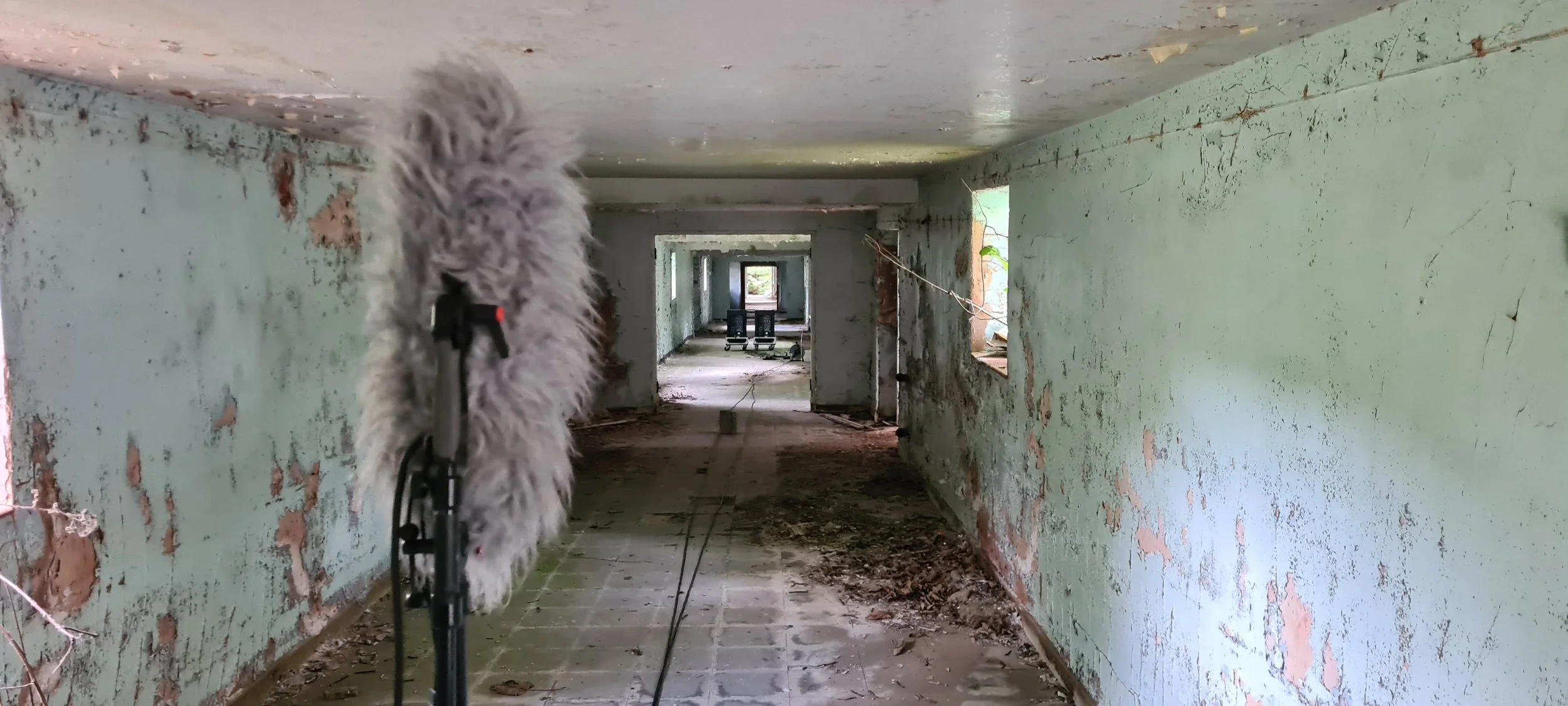
Nocton Hall Hospital, Lincolnshire
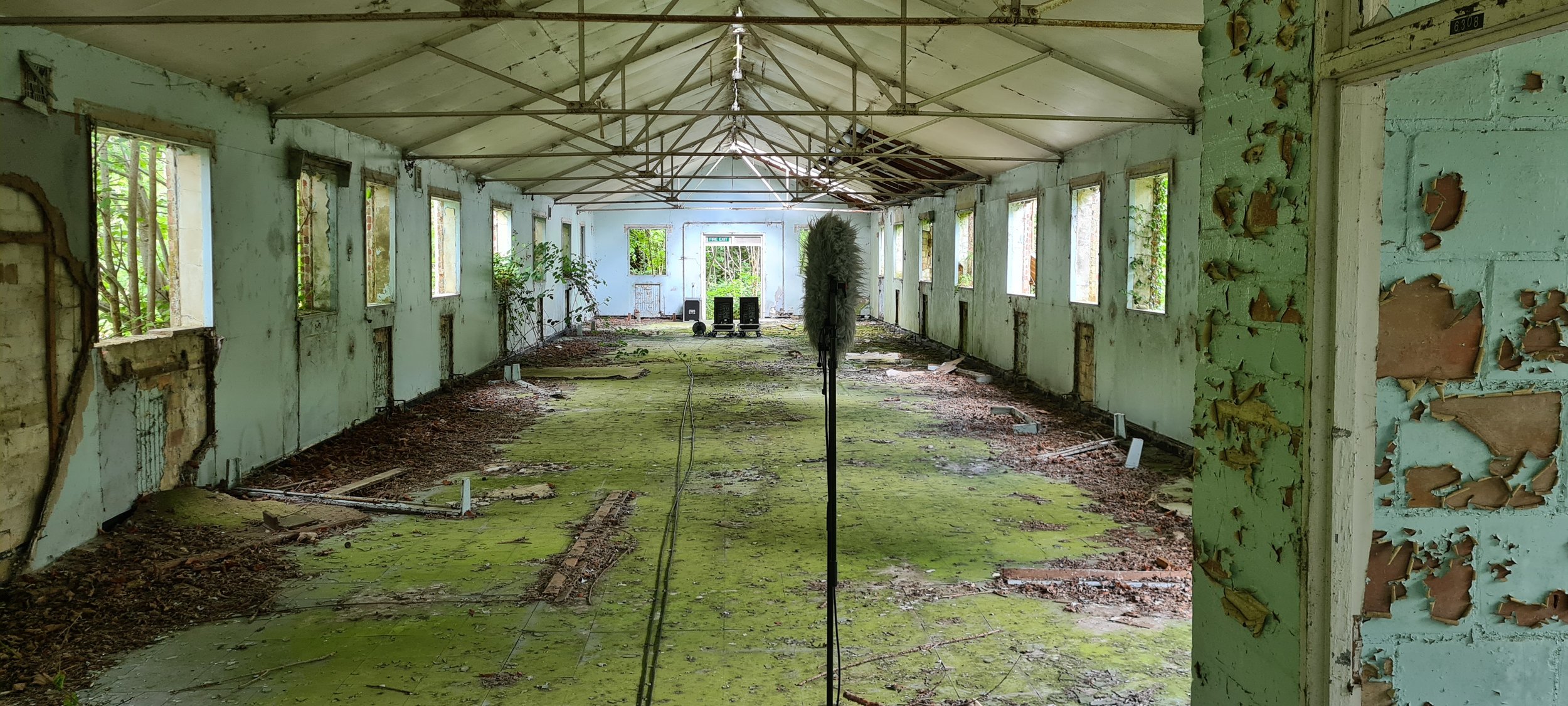
Interior of an abandoned building with peeling paint, broken windows, and a moss-covered floor. Weeds are growing through the floor and the ceiling has rusty metal beams. A microphone on a stand is in the center of the room.
An abandoned building corridor with peeling green paint on the walls, dirt and debris on the floor, and chairs visible at the end of the hallway. A fuzzy microphone is in the foreground.

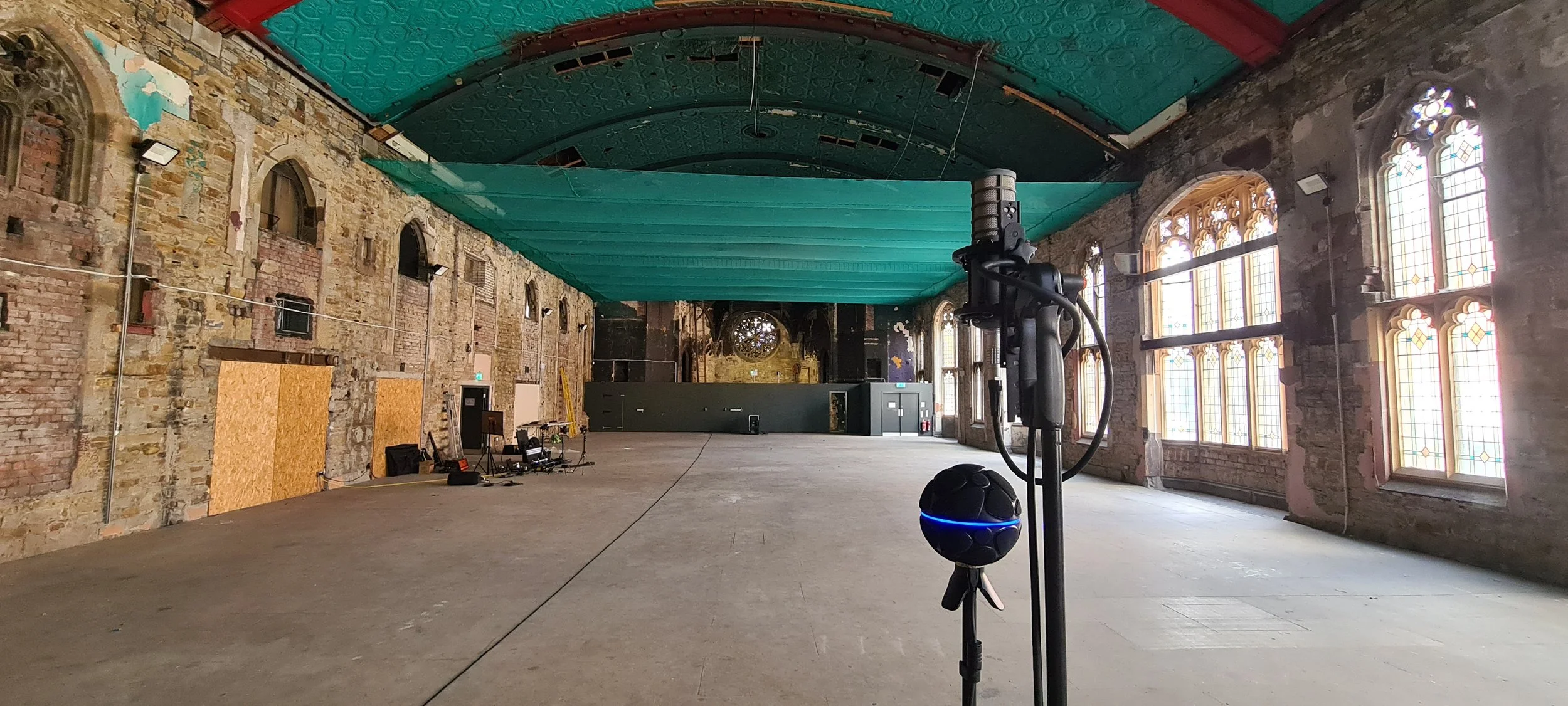
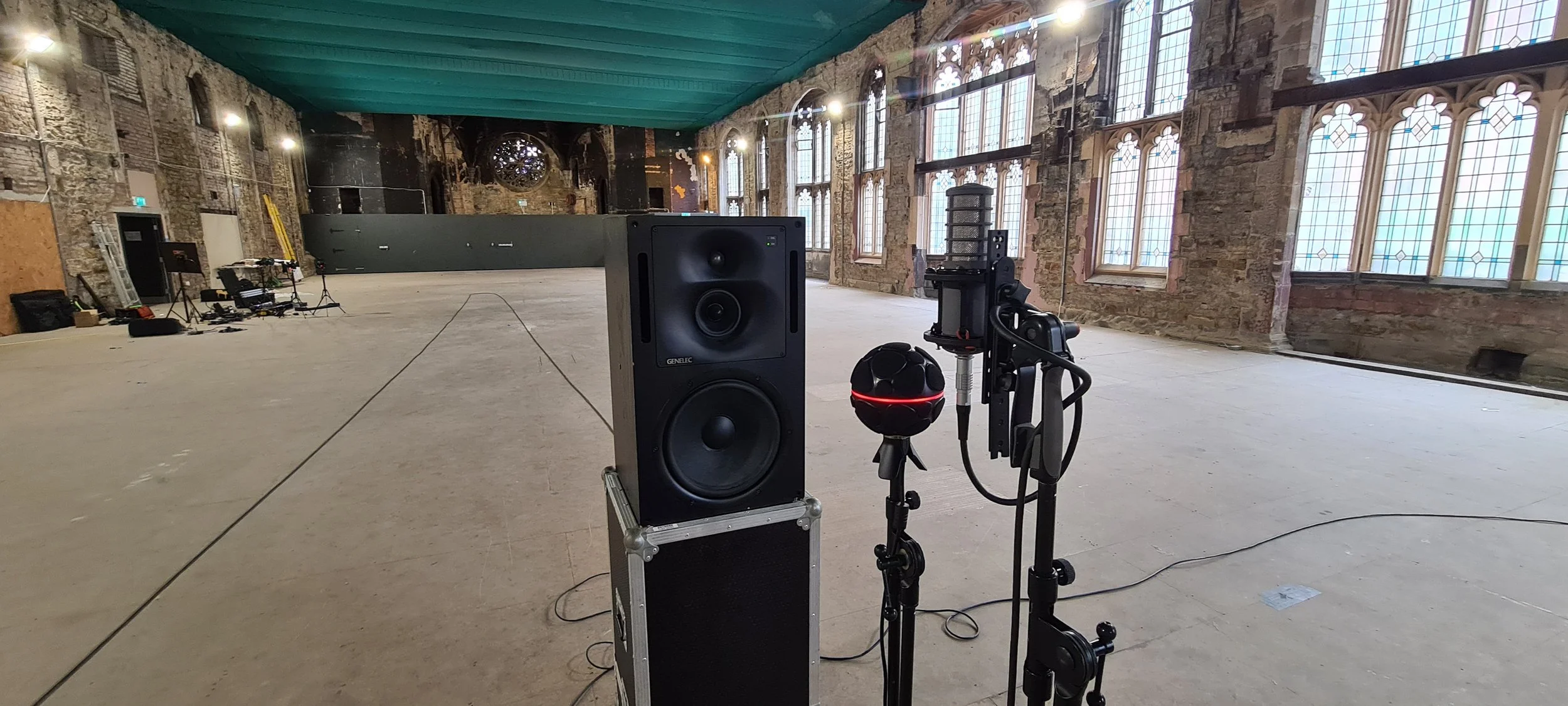
The Exchange, Blackburn

Interior of a large, historic building under renovation with exposed brick and stone walls, high arched windows, and a partially installed ceiling with green panels. There is construction equipment, scenery props, and a microphone on a stand.
An empty indoor space with tall stained glass windows, stone walls, and a high ceiling painted green. There is a speaker, microphone, and lighting equipment set up in the foreground, indicating preparations for a performance or event.

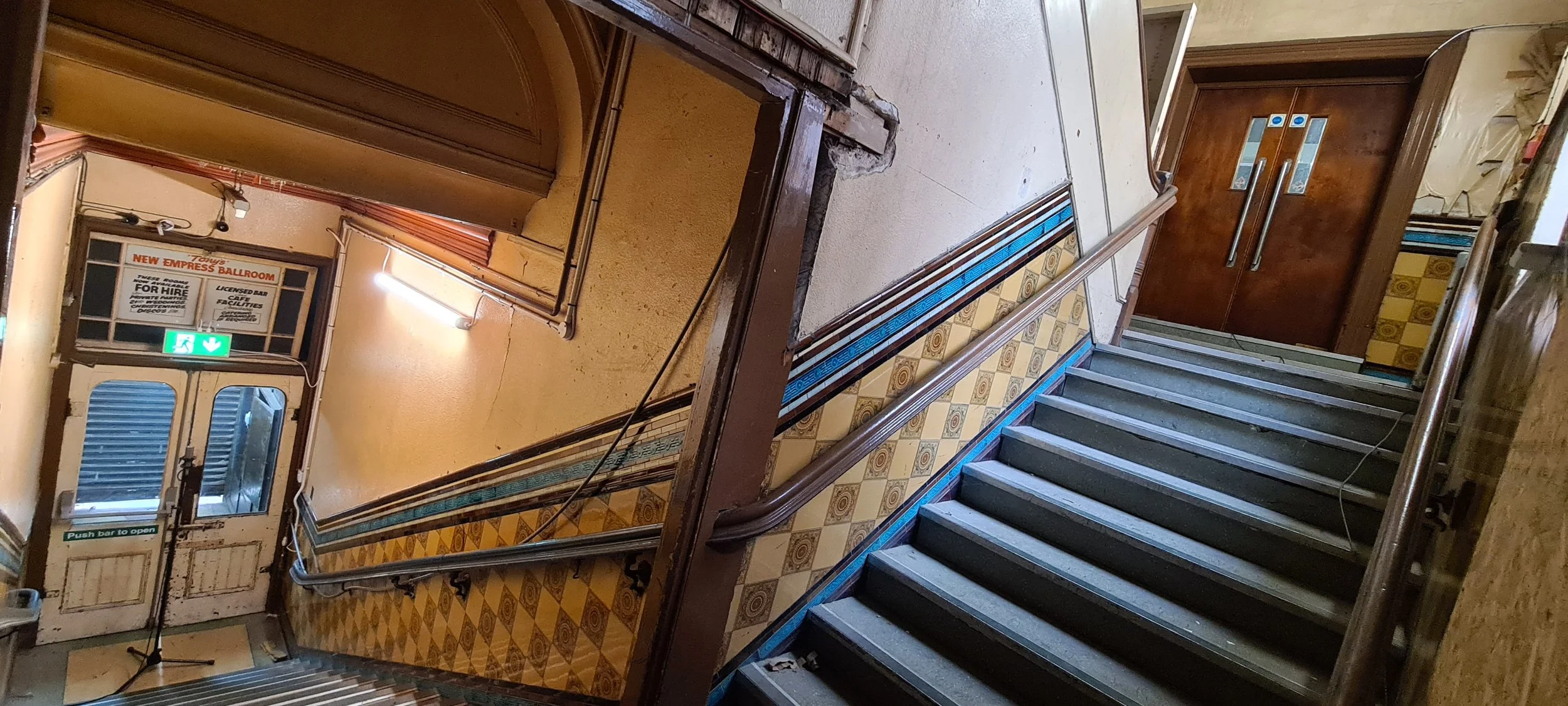
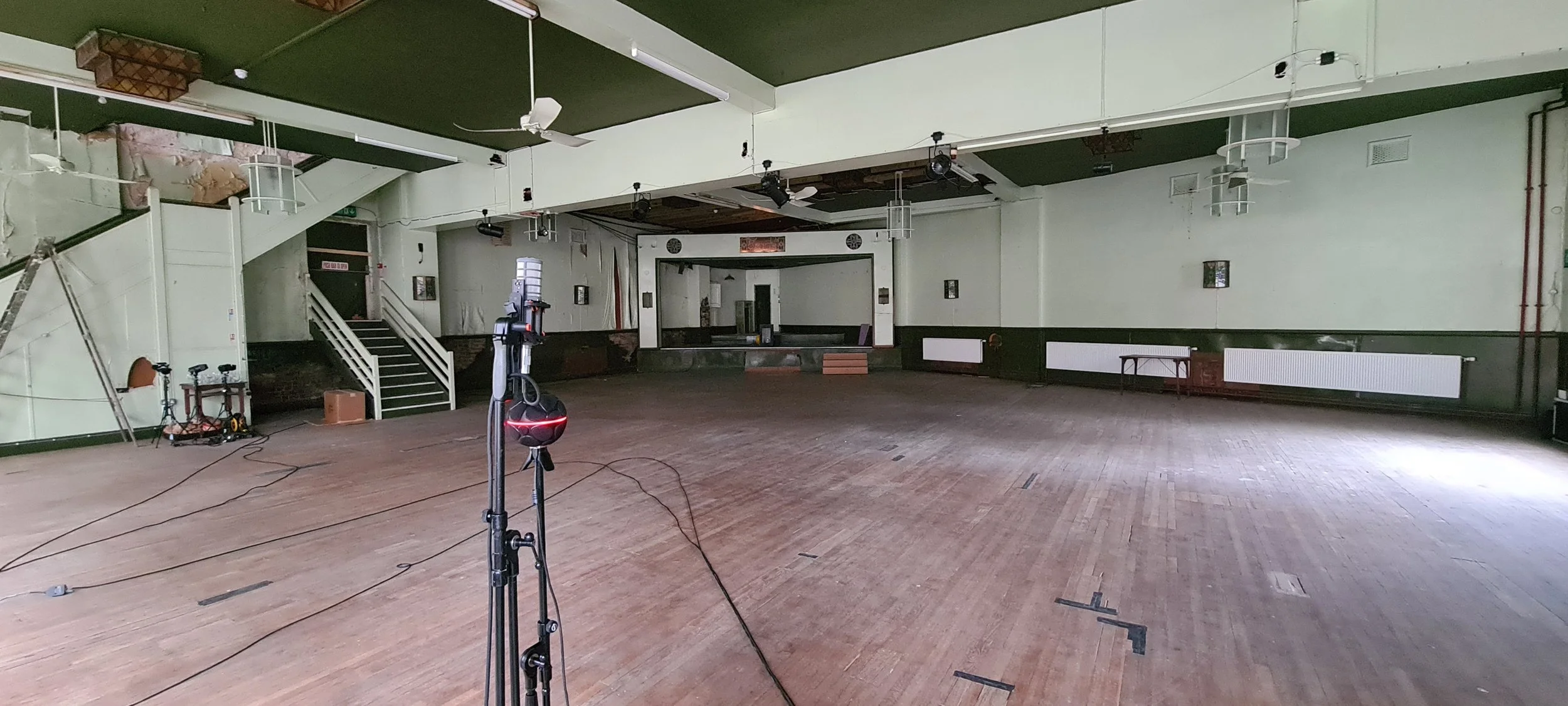
Tony’s Empress Ballroom, Blackburn

Interior view of a staircase leading to an upstairs hallway with a closed double wooden door at the top. The staircase has a railing on the right and patterned tiles at the base, with some carpeted steps. Walls are painted yellow with some cracks, and there are signs including an emergency exit sign and a poster for a ballroom.
Empty indoor dance hall or event space with wooden floor, elevated stage, and ceiling fans. Equipment like lights and cables are set up, indicating it might be prepared for a performance or event.